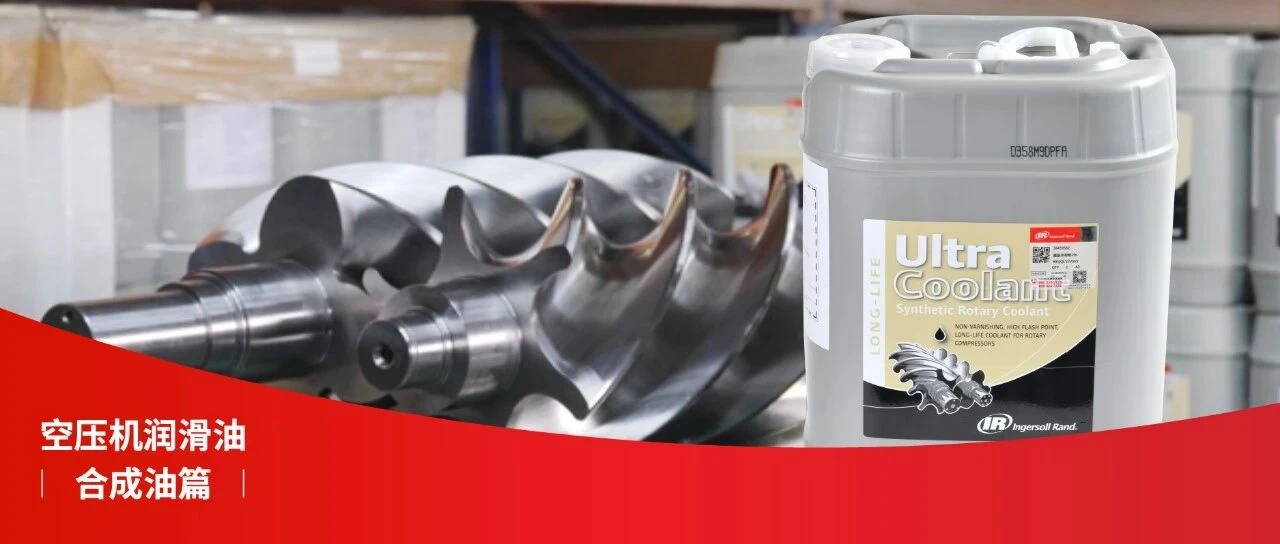
Air compressors release a large amount of heat and generate friction during operation. At this moment, air compressor lubricating oil plays an important role, not only providing lubrication but also performing multiple functions such as cooling, rust prevention, cleaning, sealing, cushioning and so on. It is crucial for extending equipment lifespan, improving work efficiency and maintaining stable operation. The key to ensuring smooth operation of equipment lies in the rational selection and correct use of lubricants.
Faced with the wide variety of air compressor lubricants on the market, how to choose a suitable product has become a difficult problem for many customers. Mineral oil is known for its low cost and wide range of applications. Compared with synthetic oil, its shortcomings include rapid formation of sludge and varnish, short oil change interval, and high oil mist outlet. Different synthetic oil also has their own unique characteristics. Polyalphaolefin (PAO) synthetic oil is a relatively common type of synthetic lubricant for air compressors on the market, but prolonged operation may lead to the formation of varnish, thereby reducing heat transfer efficiency, increasing the risk of coking, and resulting in higher oil mist outlet. Ester-based synthetic oil stands out for their excellent oxidation stability and lubricity, but long-term operation may lead to sludge formation, affecting oil life. Additionally, the weaknesses in hydrolytic stability and seal compatibility are difficult to improve through additive system, so ester-based synthetic oil is only suitable for specific working conditions. Polyether, on the other hand, utilizes its characteristics as highly polar synthetic base oil, which not only eliminates the occurrence of sludge and varnish from a mechanistic standpoint but also provides excellent oxidation stability, hydrolytic stability, and lubricity. The high heat capacity and thermal conductivity of polyether also provide additional support for temperature control in air compressor systems.
To thoroughly investigate the performance of synthetic lubricants for air compressors, we selected three commonly used products on the market with an 8,000-hour oil change interval: the internationally mainstream PAO product (abbreviated as Product S), the domestically mainstream PAO+ diester product (abbreviated as Product C), and Ingersoll Rand's polyether-based Ultra Coolant (abbreviated as Ultra Coolant). We conducted a comprehensive and in-depth comparative test, which covered multiple dimensions, including rust prevention, anti-foaming properties, and cleaning performance, with the aim of providing users with valuable reference information.
First, we conducted rust prevention tests. Rust prevention capability is key to the ability of air compressor lubricants to protect the internal metal components of compressors from corrosion. In accordance with the ASTM D665B standard sea water corrosion test, we immersed standard steel rods in lubricant samples containing 10% standard sea water. The results showed that product C exhibited significant rusting, indicating slightly insufficient rust prevention capability, while products S and the Ultra Coolant steel rods remained smooth and clean, demonstrating excellent rust prevention performance.
Next, we conducted an anti-foaming test. Foam resistance is one of the key indicators for evaluating the performance of air compressor lubricant, as it affects the lubricating performance and cooling efficiency of the oil. In the tests conducted at 24°C, 93.5°C, and again at 24°C, Product C, Product S and Ultra Coolant all demonstrated excellent foam resistance, with the initial foam height and the foam height after 10 minutes being nearly identical. It indicates that all three products perform exceptionally well in terms of foam resistance.
Finally, we conducted a cleanliness test. Cleaning performance directly affects the cleanliness of the compressor's internal system, which in turn impacts the equipment's operation efficiency and lifespan. Through accelerated ageing TOST tests, Product C showed obvious oil sludge in the test tube, and the coking phenomenon was relatively serious. While Product S demonstrated better cleaning performance, its sludge generation was slightly higher. In contrast, the Ultra Coolant’s tube had virtually no sludge residual, maintaining a highly clean system and effectively preventing sludge from negatively impacting cooling efficiency and lubrication performance. When selecting air compressor lubricating oil, it is essential to consider the design requirements and operating environment of the air compressor comprehensively, rather than focusing solely on price, brand, and the specified oil change interval. Ingersoll Rand Ultra Coolant, with its unique formulation, excels in rust prevention, foam resistance and cleanliness, particularly its outstanding cleanliness performance, which significantly enhances compressor operation efficiency and lifespan.
In addition to Ultra Coolant, Ingersoll Rand's other 8,000-hour polyether-based product, Ultra G lubricant, also outperforms mainstream PAO and ester-based products on the market.
Video text displays:
1. Exceptional cleaning performance, effectively preventing sludge and carbon deposits.
2. Excellent high-temperature stability, suitable for a wider range of working conditions and offering a longer service life.
3. Superior thermal conductivity, providing better cooling performance.
4. Outstanding corrosion protection, effectively safeguarding all components of the air compressor.
We sincerely hope that this evaluation will serve as an effective guide for customers in selecting air compressor lubricants, precisely meeting the actual needs of your equipment, effectively extending its service life, and making your equipment more efficient and environmentally friendly!