A wholly owned subsidiary of Italy-based UFI Group, Shanghai UFI is a global leader in filtration and thermal management technologies. Its products serve a wide range of industries, including automotive, aerospace, and marine applications, and are trusted by world-renowned organizations ranging from Formula 1 teams to advanced space exploration programs.
As part of its ongoing commitment to sustainability and technological innovation, Shanghai UFI sought to modernize its existing compressed air station to achieve higher efficiency, greater intelligence, and improved environmental performance.
Drawing on its extensive engineering expertise and industry experience, Ingersoll Rand developed a customized intelligent compressed air solution tailored to Shanghai UFI's operational requirements, helping support the company's sustainability objectives while enhancing production efficiency and system performance.
I. System-Level Energy Efficiency Gains Validated by Independent Certification
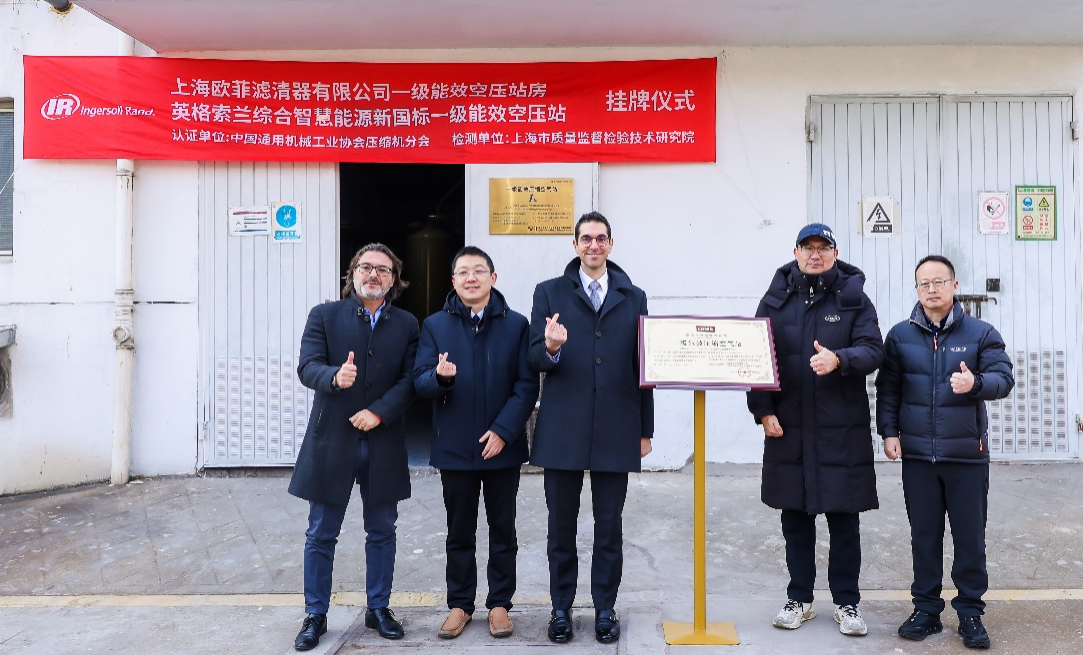
The project was designed and evaluated in accordance with the requirements for Grade 1 energy efficiency under the new national standard, GB/T 45785-2025 Energy Performance Evaluation of Compressed Air Stations. Following independent testing and assessment by the Shanghai Institute of Quality Inspection and Technical Research, the project was officially recognized by the Compressor Branch of the China General Machinery Industry Association as a Grade 1 Energy-Efficient Compressed Air Station under the energy management evaluation framework.
As one of only a limited number of projects in Shanghai to achieve this certification, the accomplishment further demonstrates Ingersoll Rand's extensive expertise and proven capabilities in delivering system-wide energy efficiency solutions for the automotive manufacturing sector.
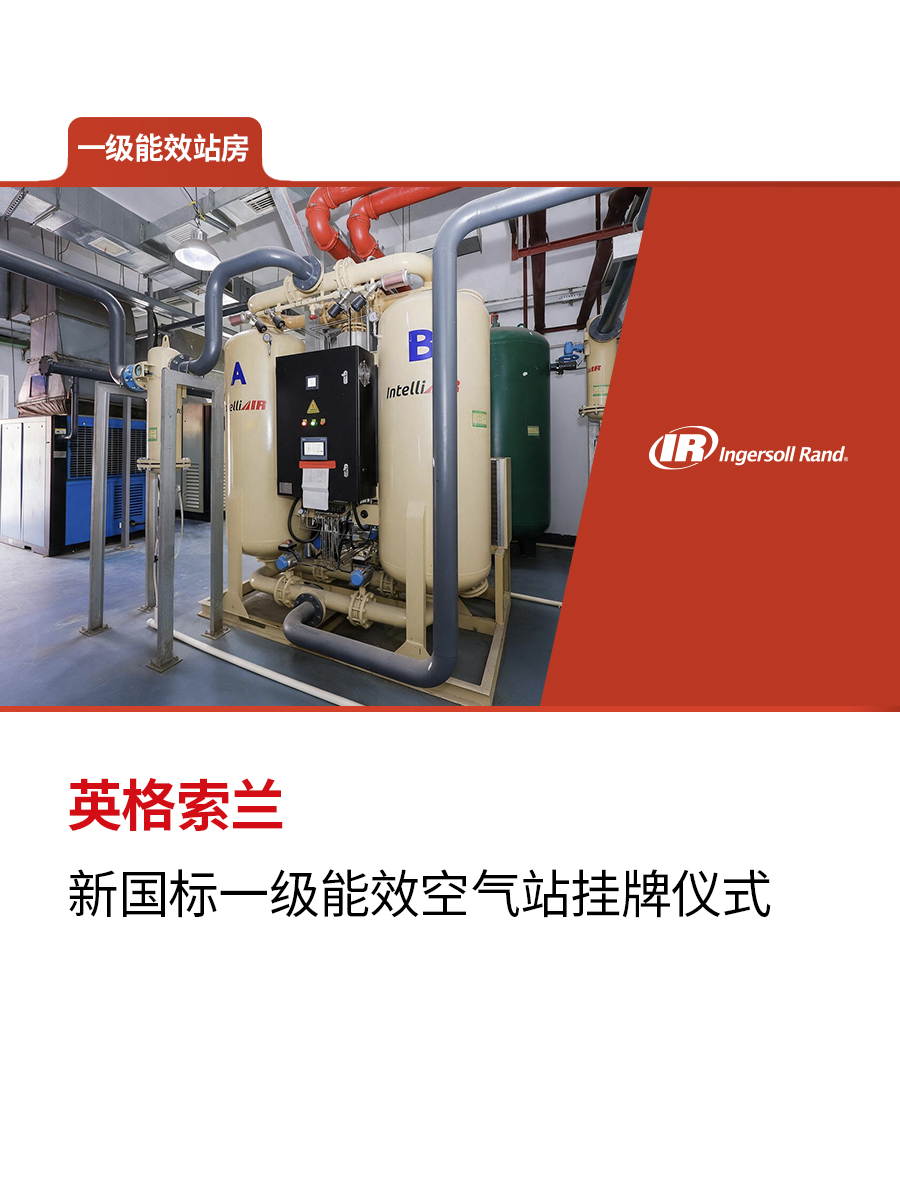
To maximize energy performance, Ingersoll Rand implemented a carefully engineered station configuration featuring two Grade 1 energy-efficient rotary screw compressor packages, zero-purge desiccant drying systems, and other high-efficiency supporting equipment. The solution is further enhanced by the Intelli-CP cloud-based platform, which enables 24/7 intelligent system management, automated energy performance reporting, and continuous optimization of equipment operation, energy efficiency, and compressed air demand.
As a result, the project achieved an energy-efficiency improvement of more than 32%, significantly exceeding the industry's typical retrofit savings range of 15-20%. The outcome highlights the value of Ingersoll Rand's system-oriented approach to energy efficiency optimization, delivering measurable performance improvements through the integration of equipment, controls, and intelligent energy management.
II. Industry Recognition Reinforces the Value of Sustainable Manufacturing
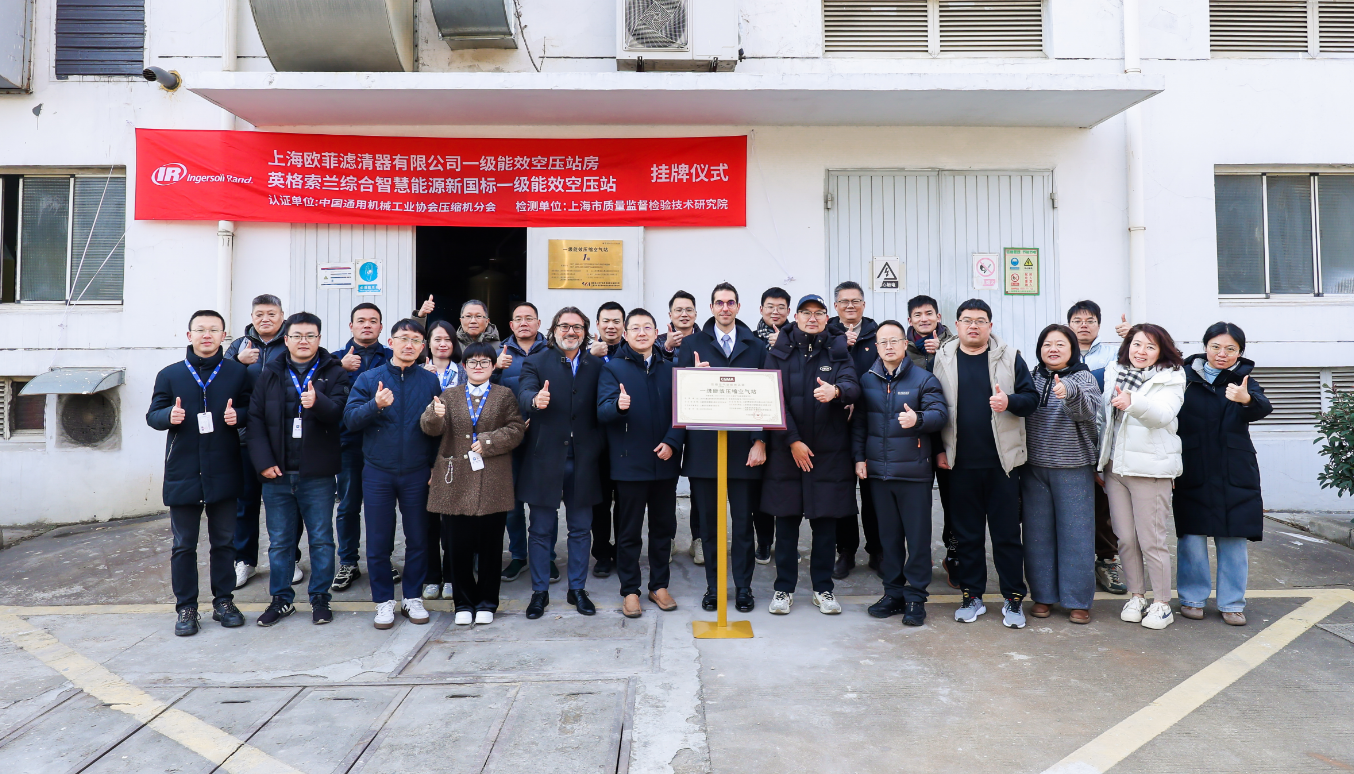
At the certification ceremony, industry experts and business leaders shared their perspectives on the project's achievements and the evolving landscape of energy-efficient manufacturing, recognizing the value of the collaboration between Ingersoll Rand and Shanghai UFI.
Dr. Sun Bin of the Shanghai Institute of Quality Inspection and Technical Research noted that the introduction of the new national standard marks a significant shift toward evaluating compressed air systems on the basis of overall system performance and energy efficiency. He highlighted the Ingersoll Rand-Shanghai UFI project as a practical example of how system-level optimization can deliver measurable results and provide a valuable reference for manufacturers pursuing similar energy-efficiency initiatives.
Liu Yanwu, Service Director, Ingersoll Rand Industrial Technologies, discussed the importance of a lifecycle approach to energy management, highlighting Ingersoll Rand's capabilities in solution design, operational support, and continuous performance improvement.
He commented:
"Grade 1 energy efficiency certification is not simply an achievement, but a reflection of long-term operational excellence. At Ingersoll Rand, we remain focused on helping customers achieve their sustainability objectives through advanced technologies, engineering expertise, and comprehensive lifecycle services."
Simone Trazzi, CEO, UFI Group Asia Pacific and India, shared UFI's perspective on selecting Ingersoll Rand as a strategic partner for its energy-efficiency initiative.
He noted that the project has delivered meaningful reductions in energy consumption and operating costs while further strengthening the company's sustainability performance across its global manufacturing network. The collaboration demonstrates how strategic partnerships can generate both environmental and business benefits through innovation and continuous improvement.